



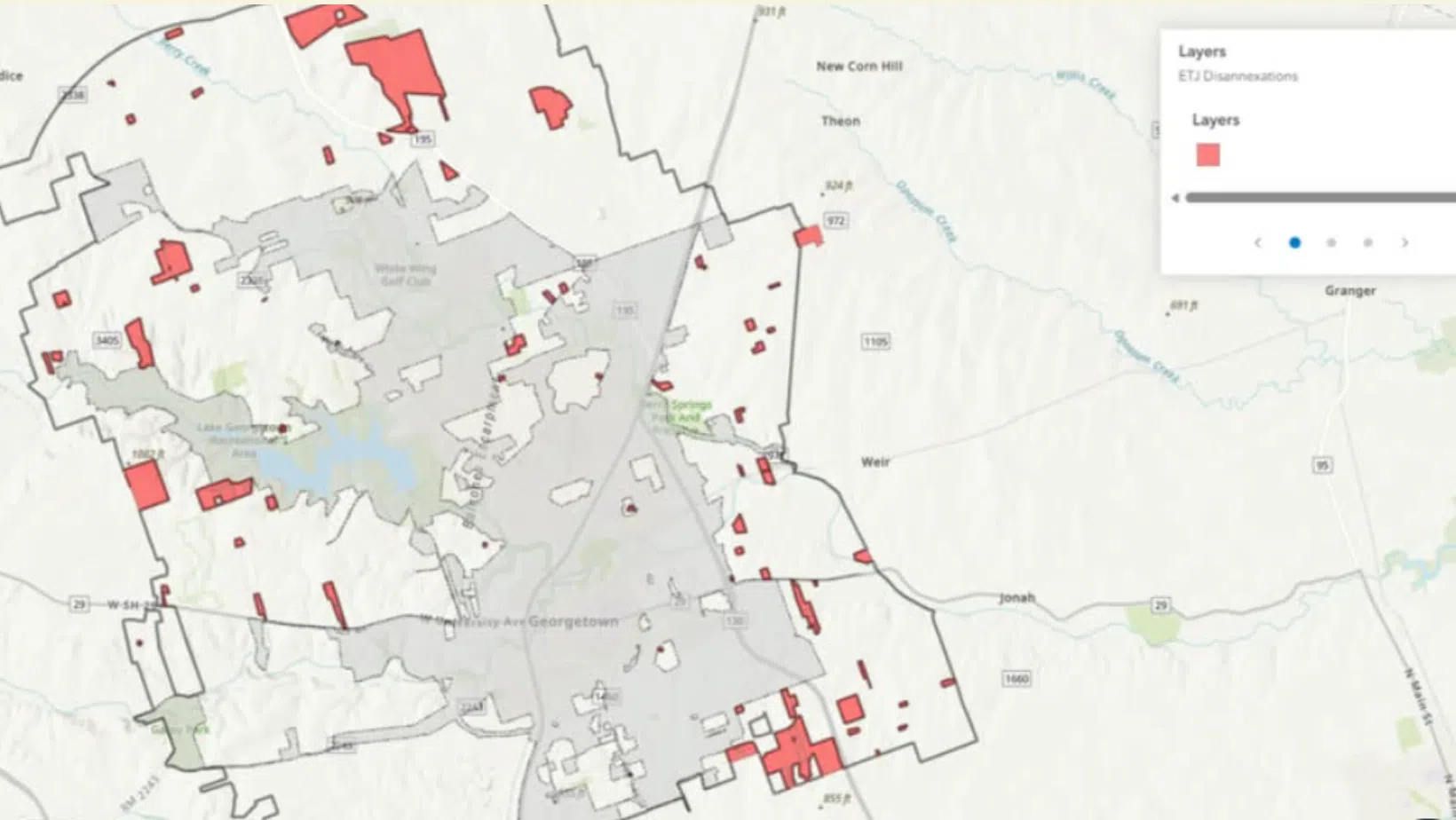
A new development proposal east of Georgetown has triggered urgent concern among nearby residents who only recently learned about plans for a wastewater treatment facility tied to a 50-acre multifamily project along Highway 29.
Riverside Land Development LLC has applied to build 395 apartments on land fronting Hwy. 29, just east of Gabriel Forest. The wastewater facility associated with the project would sit at the back of the property directly bordering several existing homes.
According to the permit application, the facility could discharge up to 50,000 gallons per day of treated effluent. Raw sewage would be piped from the apartments across the river to the treatment site. Residents say this location raises serious questions about groundwater safety, public health, and long-term environmental impacts, especially since this part of the river corridor is known for rapid flooding during heavy rain events.
Homeowners have also pointed out the presence of three underground caves just feet from the proposed discharge area, placing the project within the sensitive Edwards Aquifer Recharge Zone. Because this zone feeds groundwater supplies and private wells across the region, even treated wastewater entering the system raises concerns about aquifer health and contamination risk.
The Role of the New ETJ Opt-Out Law
One of the biggest factors shaping this situation is a state law that took effect on September 1, 2023. Senate Bill 2038 created a new process allowing landowners and residents to remove their property from a city’s Extraterritorial Jurisdiction (ETJ). Once released, the city loses its ETJ authority over land use, subdivision rules, development design, and infrastructure requirements.
Under SB 2038, a landowner in the ETJ can petition to be released, and if certain thresholds are met, the property exits the ETJ without needing city council approval or public hearings. Once out, the city cannot re-add the property unless the landowner requests it.
(Source: Texas Legislature, SB 2038 Final Bill Analysis: https://www.legis.state.tx.us/tlodocs/88R/analysis/pdf/SB02038F.pdf)
Because this Highway 29 property opted out under this law, the City of Georgetown no longer has oversight in this case. That leaves the Texas Commission on Environmental Quality (TCEQ) as the primary regulatory body for the wastewater facility. This development is one of the first significant examples of how the opt-out law is reshaping growth and oversight in high-growth areas like Georgetown.
Key Concerns Raised by Residents
Residents planning to speak at the public meeting have identified several major issues they want TCEQ to address:
• Potential for groundwater contamination due to proximity to caves and the Edwards Aquifer Recharge Zone
• Risk to private wells
• River pollution concerns during flooding
• Impacts to wildlife and natural ecosystems
• Odor and noise associated with an onsite wastewater plant
• Increased traffic from a 395-unit development
• Questions about emergency response plans in flood conditions
• Lack of explanation for why the development is not connecting to Georgetown’s public sewer system
All of these topics fall within TCEQ’s public comment guidelines for wastewater permit review.
Public Meeting and Comment Deadline
Residents have until Nov. 17 to submit comments to TCEQ.
Public Meeting
Monday, Nov. 17 at 7 p.m.
Georgetown Chamber of Commerce
1 Chamber Way, Georgetown
(Residents plan to meet at 6:30 p.m. to coordinate concerns.)
To submit a public comment online:
https://www14.tceq.texas.gov/epic/eComment/
Use Permit # WQ0016495001
Property maps and details can also be viewed at wcad.org by searching for Riverside Land Development LLC.
Why This Matters Beyond the Immediate Area
Even if residents live outside the immediate impact zone, the issue extends beyond property lines. Because this area depends heavily on groundwater and the river ecosystem, flooding, groundwater flow, and aquifer recharge can affect nearby neighborhoods as well. The accelerated timeline under SB 2038 also means major development decisions can advance before the public is fully aware.
With the comment period closing soon, neighbors are urging anyone with concerns about well safety, environmental impact, or long-term implications of decentralized wastewater facilities to participate in the review process.









Comments